
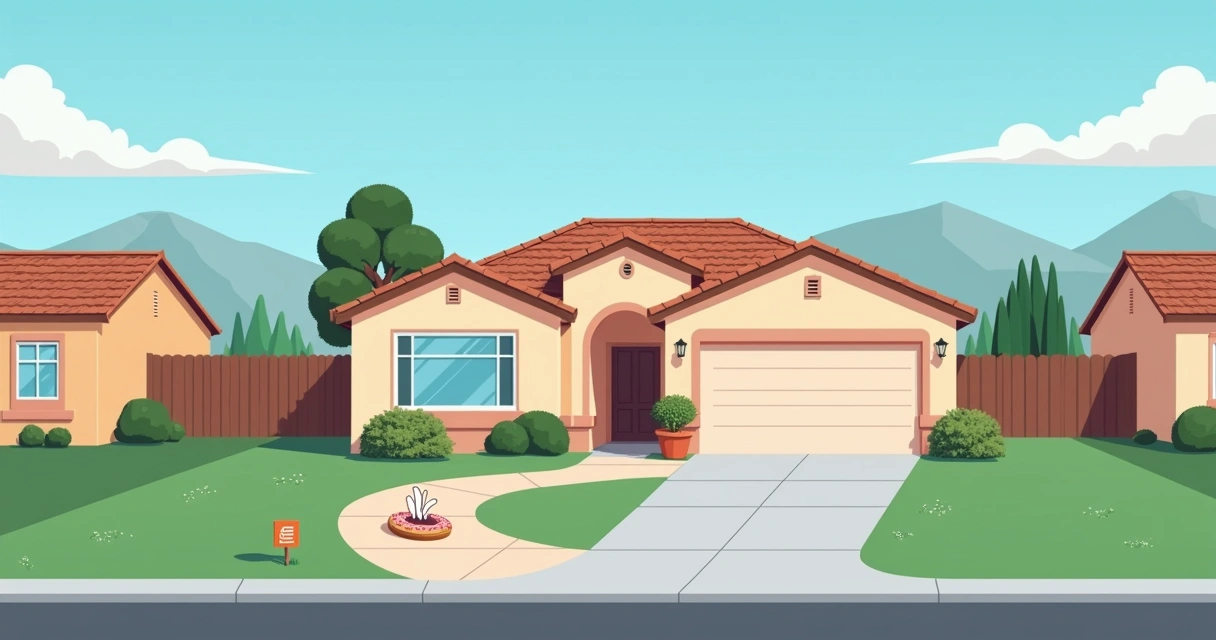
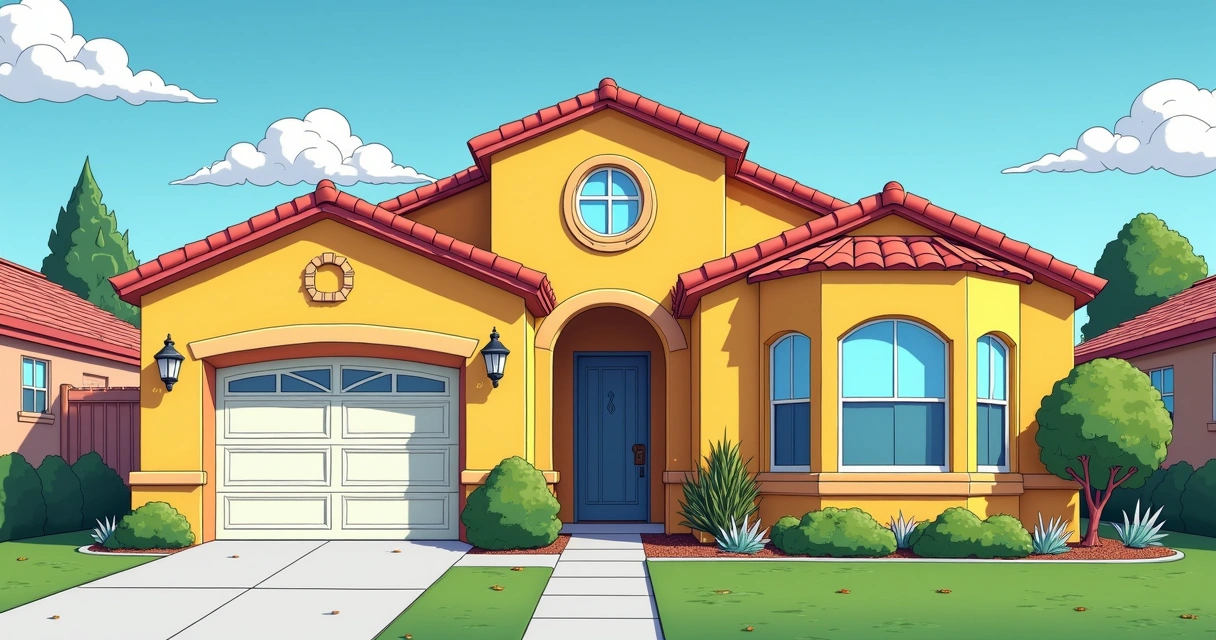
When we talk about iconic houses in the United States, few surpass the barrier of entertainment like the replica of the Simpsons' house, built in 1997 in Henderson, Nevada. This story goes beyond simple fandom for the series: it connects pop culture, aggressive marketing, and, of course, the genuine curiosity that themed properties awaken in the public and investors.
The unusual origin: from raffle to real estate celebrity
It all started thanks to a grand promotional action uniting Pepsi, Fox, and the construction company Kaufman & Broad S.A. The goal was to promote The Simpsons while engaging the public with a bold proposal: to build a faithful copy of the Simpsons' house, within a residential community, to be raffled among fans of the series. The chosen address? 712 Red Bark Lane, in Henderson, Nevada, United States.
In the raffle, the winning person could choose between the house or US$ 75,000 in cash. The winner preferred the cash prize, which ended up putting the property up for sale to the general public.
Details and concept: faithful reproduction and ambitious project
The construction was not treated as a simple decorative project. It was built based on more than 100 episodes analyzed by the builders to ensure every detail. There were 49 days of intense work, with a cost of only US$ 20,000, a negligible amount compared to the current market value, estimated at around R$ 2 million (US$ 429,000).
- 202 square meters;
- Four bedrooms;
- Two bathrooms;
- Identical painting to that of the series;
- Decorative items that made direct references to the characters.
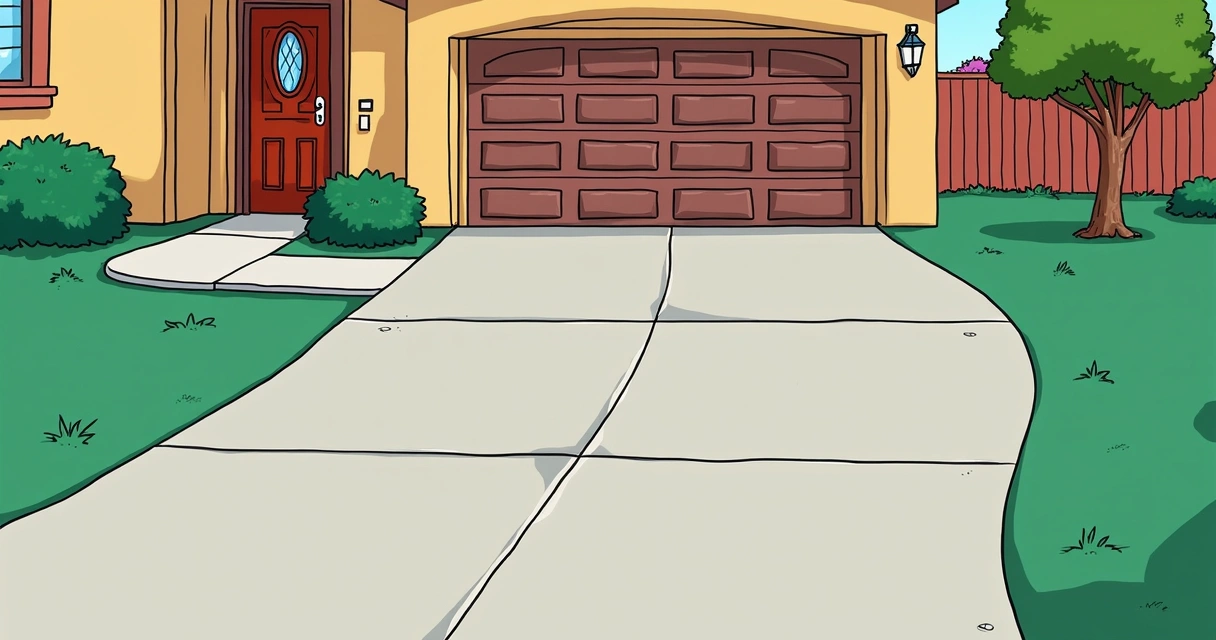
Matt Groening, the creator of the series, was present at the inauguration and made history by drawing Homer Simpson in the concrete path to the door, and Bart next to the garage. This added even more symbolic value to the property, as shown in reports about the construction of the replica.
The house became an urban legend, mixing fiction and reality in one address.
During my work as a strategic advisor at Premier Sotheby’s International Realty, a fundamental context for my analysis, I see how properties like this generate collective fascination but also face commercial limitations, mainly due to their residential location.
Transformations over the years: from themed house to private residence
The tourist appeal of the property is undeniable, but as I always tell my clients in the vacation homes universe in Orlando, there are clear limits imposed by zoning and privacy. After the sale, the new owner made renovations and repainted much of the house. Recognizable visual elements, such as vibrant colors and characters, were removed.
Inside, the decor faithful to the series was also replaced by a conventional environment, making the house more like an ordinary residence.
- All visible thematic references from the street have disappeared;
- Visiting the interior of the house is not allowed;
- The property is used as a private residence to this day.
Another curious point that often raises questions in meetings and technical visits: the house does not appear on Google Earth or Google Maps, as its image is intentionally blurred, out of respect for the privacy of the current residents.
Curiosity yes, access no. The privacy of the residents comes first.
Market value and perspectives: how much is the Simpsons' house worth today?
Based on my market experience, I usually explain that iconic properties carry prices above the area standard, but their true potential depends on liquidity, appeal, and usage restrictions. Currently, the Simpsons' house is valued at around US$ 429,000, just over R$ 2 million.
For comparison, it is possible to find themed properties for rent in large communities in Orlando at proportional prices, but the differential of the Simpsons' house lies in its historical and symbolic value, something that often weighs much more than square footage or finish.
Themed rentals in Orlando deliver superior returns for investor profiles seeking utilization, not just asset.
Why didn't the house become a museum?
While many fans dreamed of seeing the house turn into a museum, the reality is more prosaic. In a strictly residential area, there is no permission to transform the property into a tourist spot, formal attraction, or museum. This limitation is something I emphasize in my consultancy to those seeking opportunities abroad: respecting local rules is as important as creativity in the project.
According to my analysis, inspired by experience in dozens of negotiations in Magic Village, Windsor Island, and other similar profile communities, the residential use restriction would make any attempt to open to the public put the property at legal and financial risk. Therefore, the house functions only as a visual reference, accessible, albeit only from the outside, to the most avid fans.
The influence on the market and the thematic appeal
Even having lost much of its plasticity, the Simpsons' house in Henderson continues to attract attention. Many fans still seek photos of the location, trying to see in person what remains of this marketing phenomenon. There are visitors who drive by just to see the colorful facade, which is now already uncharacterized.
On the other hand, the effect on the real estate market is a valuable reminder for investors. Themed properties can deliver initial prominence, but their appreciation depends on the ability to adapt over time and the proper zoning. Exactly for this reason, when I advise clients interested in vacation homes in Orlando, I always advocate for a balance between creativity and compliance with local regulations, a factor addressed in detail in the complete guide to investing in vacation homes.
While other brokers may offer basic information, my experience as an advisor allows me to analyze everything from rental viability to liquidity issues and exit strategy. The case of the Simpsons' house confirms a key point: not everything that becomes a pop legend translates into a classic investment. But the power to generate conversations, visits, and, of course, many photos at the door is undeniable.
Final reflections: what have we learned from the Simpsons' house?
In the end, I see the story of the Simpsons' house as a great case about how creativity can create opportunities, but also how the reality of the market, and its rules, impose very clear boundaries. For those, like me, who work supporting international investors and high-end families in the search for vacation homes, the lesson is: it is possible to unite passion and strategy, as long as decisions are anchored in professional analysis and respect for the limits of each project.
If the universe of themed houses inspires dreams, Orlando remains the most solid and secure path to invest with creativity, liquidity, and safety. To learn more about truly unique professional opportunities, I recommend exploring the best investment tips for vacation homes in the United States, always based on practical experience and clear strategy, differentiators that you can only find here.
Frequently asked questions about the Simpsons' house in the United States
What is the Simpsons' House in the USA?
It is a faithful replica of the Simpsons' house, built in 1997 in Henderson, Nevada, by the construction company Kaufman & Broad S.A., as part of a joint promotion between Pepsi and Fox. The property was raffled, and after the winner opted for cash, it became available for sale, becoming a reference for fans of the show and curious real estate enthusiasts.
How much did it cost to build the Simpsons' house?
The construction cost of the replica was only US$ 20,000 at the time, thanks to the promotional objective, quick detailing, and involved partnerships. The project took 49 days and involved analysis of more than 100 episodes for maximum fidelity.
Where is the Simpsons' house today?
The house remains at the original address: 712 Red Bark Lane, Henderson, Nevada, United States. It is a residence in a private area and is not open to public visitation. For privacy reasons, it appears blurred on Google Earth and Google Maps.
Can I visit the original Simpsons' house?
It is not possible to visit the interior of the Simpsons' house, as it is a private residence. External visitation is also limited, as there is no structure for tourists nor authorization to transform the property into a museum or public attraction.
What is the current fate of the house?
Today, the house functions as a private residence. After renovations and decharacterization, it lost its visible thematic aspect, but still holds value for fans and as a real estate curiosity. The property remains known but has lost its media function and retains only discreet elements, such as Homer’s drawing in the concrete.
If you liked this analysis and want to invest in real estate in the USA intelligently and safely, learn more about my work and discover unique opportunities in vacation homes in Orlando, always with strategic vision, real market experience, and trilingual service.